When a medical resident recently asked me to become her formal mentor, I felt gratitude and a strong sense of responsibility. To be invited into another person’s development is a privilege, and mentorship gives one person real influence over another’s confidence, opportunities, and sense of what may be possible. That influence can open doors. It can also, even with good intentions, become intrusive.
I have mentored many students and trainees, and I have spent much of my life being mentored by teachers, senior colleagues, and people whose wisdom was expressed less through instruction than through the way they lived. The most helpful among them did not simply give me answers. They helped me hear my own questions more clearly and knew when to offer direction and when to leave space for me to find my way.
That balance is difficult. Experience creates authority, and authority can harden into certainty. A mentor may begin by wanting to help and end by believing they know what another person should become.
As I considered how I wanted to enter this new mentoring relationship, three reminders kept returning to me: not knowing, seeing clearly, and acting with care. I see them not as a formula for becoming an ideal mentor, but as reminders that the inner work of mentoring matters as much as professional knowledge or good advice.
What I cannot know for another person
The first is not knowing. This does not mean ignorance. It means loosening our attachment to fixed ideas so that we can meet a situation as it actually is. For a mentor, it begins with a simple recognition: however much I may know about a profession, an institution, or a path I have travelled, I do not know what another person’s life should become.
This distinction is easy to state and difficult to live. Mentors are often sought precisely because they have experience. We know how a grant committee thinks or how an academic career unfolds. The temptation is to turn that experience into a map and hand it to the mentee as though their terrain were the same as ours.
But advice that was right for me may be wrong for someone with a different temperament, history, family responsibility, cultural background, or definition of a meaningful life. Even the most generous guidance can become a form of pressure when it leaves no room for the other person’s nature.
I learned this first as a parent. When my sons were young, I wanted them to have every possible advantage. I enrolled them in activities I believed would help them, including summer school, which they clearly did not want to attend. I told myself I was acting out of care. The result was resentment and misery, and I eventually withdrew them.
Years later, when they asked why I had pushed so hard, I told them the truth: I was a new mother. No one had taught me how to do it. I was trying to help, and I made mistakes. What changed our relationship was not that I suddenly became wiser, but that I stopped assuming my intentions were enough. I learned to listen more carefully to what they loved, resisted, and were trying to tell me about themselves.
Mentoring requires the same humility. Not knowing does not ask us to remain silent or withhold expertise. It asks us to offer what we know lightly. We can say, “This is what I have seen,” without adding, “Therefore this is what you must do.”
Sometimes the most important question a mentor can ask is not “What should you do?” but “What matters to you here?” The answer may be less efficient, less prestigious, or less familiar than the path we would choose. It may nevertheless be the beginning of the mentee’s own life rather than an imitation of ours.
Seeing clearly without turning the other person into a reflection of ourselves
The second is seeing clearly: trying to take in the whole situation without immediately judging, correcting, or turning away. In mentorship, this means seeing both the mentee and ourselves more clearly.
A mentor can easily confuse perception with projection. We may see a younger version of ourselves and try to spare the mentee every mistake we made. We may recognize a quality we admire and become invested in its development. We may also feel threatened by a mentee whose choices, gifts, or independence do not confirm our own values.
These reactions are human. The danger begins when we fail to notice them. Unexamined ambition, loneliness, insecurity, or need for admiration can quietly recruit the mentee into resolving the mentor’s needs.
Because mentorship is asymmetrical, this matters especially. In academic and professional settings, mentors may influence evaluations, recommendations, funding, introductions, and access to opportunity. In other relationships, the power may be less formal but still psychologically charged. A mentee may come to believe that the mentor possesses a clarity or wisdom they themselves lack.
Idealization often begins innocently. We may be drawn to mentors because they embody something we long to develop—courage, freedom, intelligence, compassion, confidence, or ease.
The difficulty is that admiration feels good, and being needed can feel meaningful. A mentor may gradually come to depend on a mentee’s loyalty or gratitude while telling themselves that the closeness serves the mentee’s growth.
A healthy mentor can receive that admiration without inhabiting the idealized role. They neither belittle the mentee for looking up to them nor encourage the fantasy that they are unusually wise or beyond question. They admit uncertainty, welcome disagreement, and allow the mentee to see that wisdom and limitation can coexist in the same person.
When helping means doing less
The third is acting with care. The question is not simply “What can I do?” but “What would genuinely serve this person now?” Sometimes that means intervening—offering candid feedback, advocating for an opportunity, or naming a danger the mentee cannot yet see. At other times, it means stepping back.
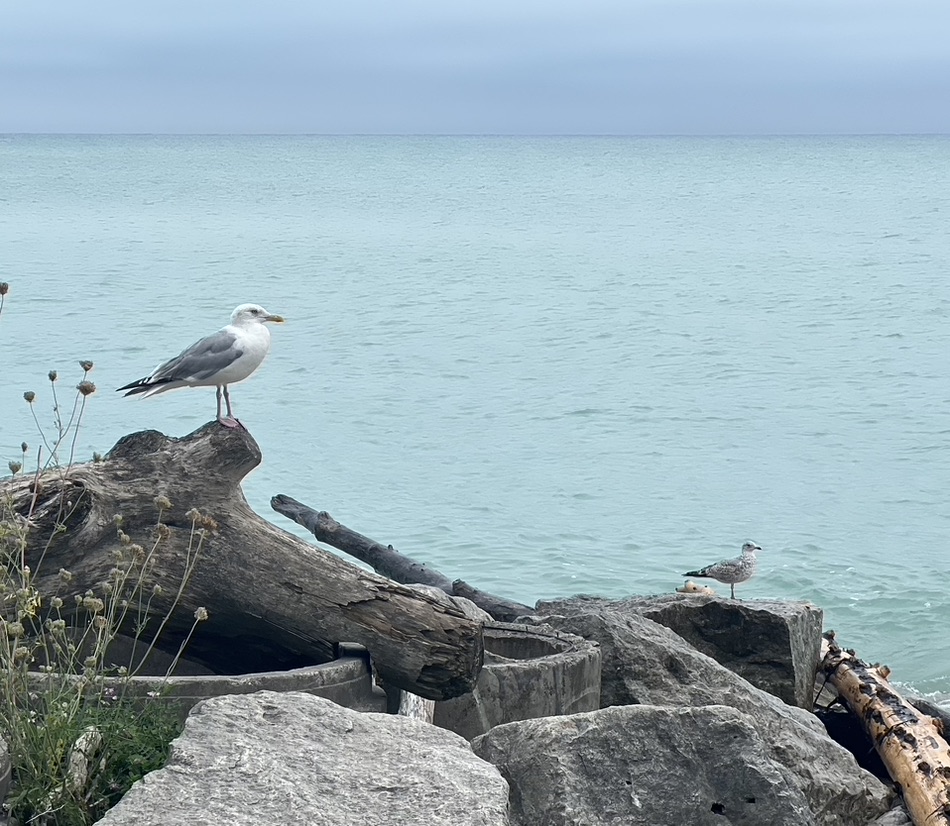
I often return to the image of water. It nourishes without demanding recognition and adapts to the shape of the land rather than imposing a form upon it. This image has helped me understand the difference between support and control.
A mentor can be present and committed without entering every decision. If we intervene too quickly, the mentee may complete the task but lose the chance to discover their own resourcefulness.
I learned this as a parent in a way that has been both challenging and instructive. As my sons grew older, I tried to let them choose their own interests rather than steering them toward the activities I preferred. Some of those choices carried risks I would never have chosen on their behalf. I have watched them suffer injuries, including concussions, and part of me has wanted to protect them by saying, “Enough.” Yet I have also had to honor how much they love the path they chose and recognize that it is theirs, not mine. Sometimes care means intervening; sometimes it means staying close, helping when needed, and resisting the urge to make another person’s life safer by making it smaller.
This is the paradox of mentoring: we use our experience in a way that gradually makes our guidance less necessary. The measure is not how often the mentee seeks our approval, but whether they become increasingly able to think, choose, and recover from mistakes without it.
Stepping back is not withdrawing care. It can mean remaining available while resisting the urge to take over, and tolerating our own anxiety as the mentee struggles.
It also means loosening our grip on outcomes. Mentors can become invested in a promotion, grant, leadership role, or other result that seems to validate their guidance. Yet the outcome we want may not be the one that best serves the mentee’s life.
To care without controlling is to remain committed while allowing reality to surprise us. The mentee may change direction or define flourishing differently. Our task is not to make their life validate ours, but to help them encounter their own choices with greater clarity and freedom.
Remaining a student
The mentors I trust most are those who remain students themselves. They allow themselves to be questioned. Experience can deepen wisdom, but it can also harden into habit and self-certainty.
Reflective practice can help, but reflection alone is not enough. No one is exempt from projection, vanity, loneliness, or the misuse of power. Even the language of care or wisdom can make these tendencies harder to see: control may be described as concern, obedience as trust, or intolerance of disagreement as the mentee’s failure to understand. What matters is noticing these movements before they harden.
For this reason, healthy mentorship needs more than good intentions. It needs boundaries, accountability, and relationships in which the mentor can be challenged too. Counselling, peer consultation, reflective writing, and honest friendship can all help us recognize what we cannot see alone—and change course when necessary.
Boundaries are sometimes misunderstood as distance or coldness. I have come to see them differently. A clear boundary protects the freedom of both people, allowing warmth without possession, intimacy without confusion, and care without making one person responsible for the other’s emotional needs.
We do not become wise mentors by mastering a set of principles. We grow into the role by paying attention: to the mentee, to the power we hold, and to the moment when guidance needs to become space.
The direction of freedom
The direction of mentorship, then, is toward freedom. Its aim is not to produce a faithful follower or a replica of the mentor, but to help another person exercise their own judgment and eventually walk without depending on the mentor’s approval.
Perhaps that is why the best mentors are sometimes remembered less for what they told us than for the quality of attention they offered. In their presence, we felt seen but not defined, supported but not controlled. They helped us recognize possibilities without claiming ownership of what followed.
To mentor wisely is to live inside a continuing question: Is this the moment to guide, or the moment to step back? We will not always answer correctly. But remaining humble enough to ask may itself keep the relationship open to learning.
Like water, good guidance leaves room around what it nourishes. In the end, the mentee may not say, “My mentor made me who I am.” They may say something quieter and more enduring: “In that relationship, I learned to trust who I was becoming.”

